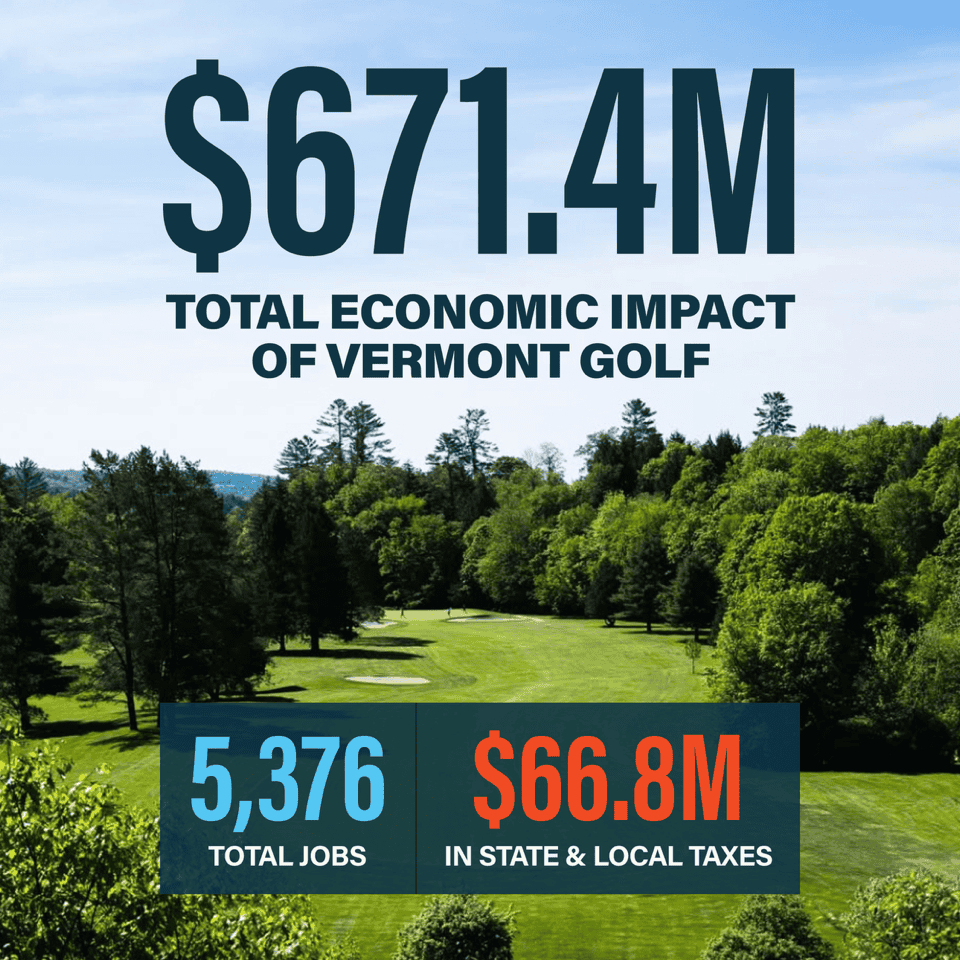
Golf is a significant economic driver in Vermont, generating an estimated $671.4 million in total impact annually. This places the game alongside—and even beyond—some of the state’s most well-known industries, including maple syrup and craft beer. The impact extends far beyond greens fees, influencing tourism, hospitality, retail, and local businesses in communities across Vermont. Whether it’s visitors traveling to experience the state’s scenic courses or residents supporting their local clubs, golf plays a vital role in sustaining and growing Vermont’s economy.
Economic Impact – Jobs & Tax Revenue
The Vermont golf industry supports over 5,300 jobs statewide, providing employment opportunities in areas ranging from course operations and hospitality to turf management and instruction. In addition to job creation, golf contributes $66.8 million in state and local tax revenue—funding essential public services and infrastructure. These numbers highlight the broader value of golf beyond recreation, reinforcing its importance as a stable and impactful economic engine within Vermont communities.
Community Impact – A Game That Gives Back
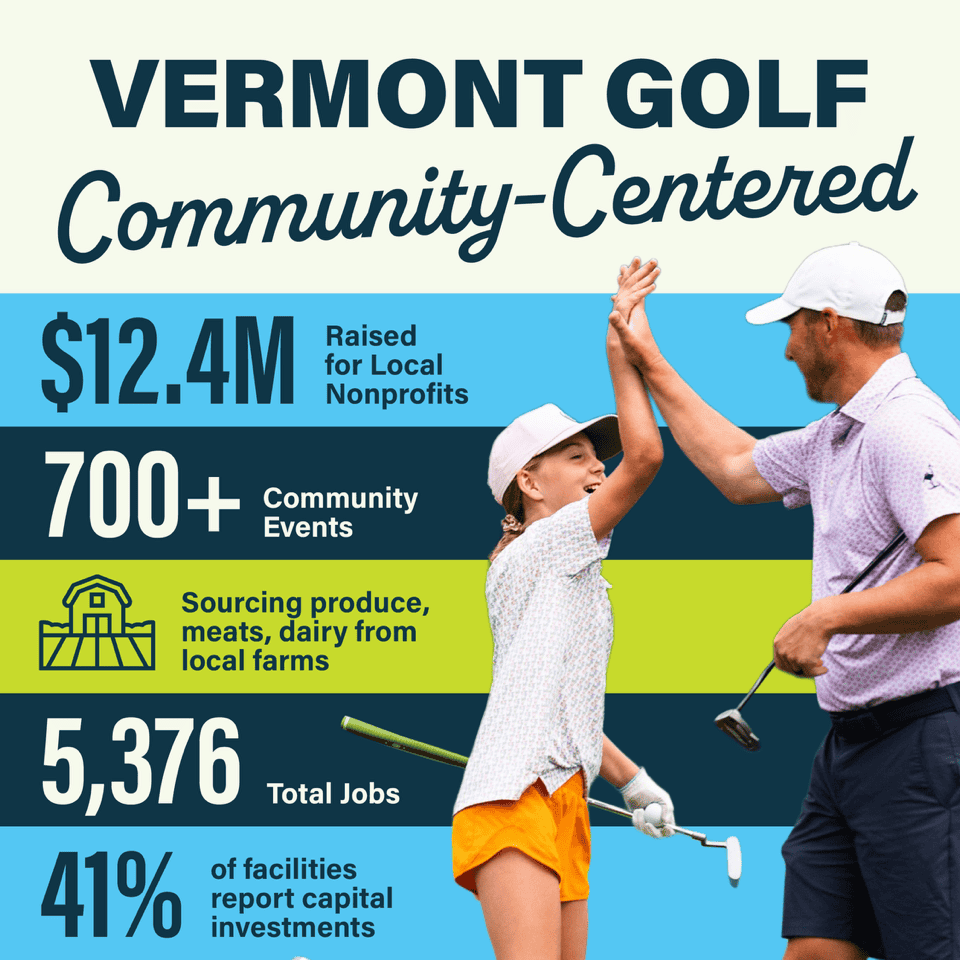
Golf in Vermont is deeply rooted in community. From charity tournaments to junior programs and local events, courses across the state serve as gathering places that bring people together. The game has helped generate over $12.4 million for local nonprofits while hosting more than 700 community events annually. Beyond the course, many facilities prioritize sourcing food and products from local farms, further strengthening Vermont’s economy and agricultural community. With thousands of jobs supported and continued investment in facilities, golf remains a meaningful contributor to the social and economic fabric of the state.
Environmental Impact – 10,880 Acres of Greenspace
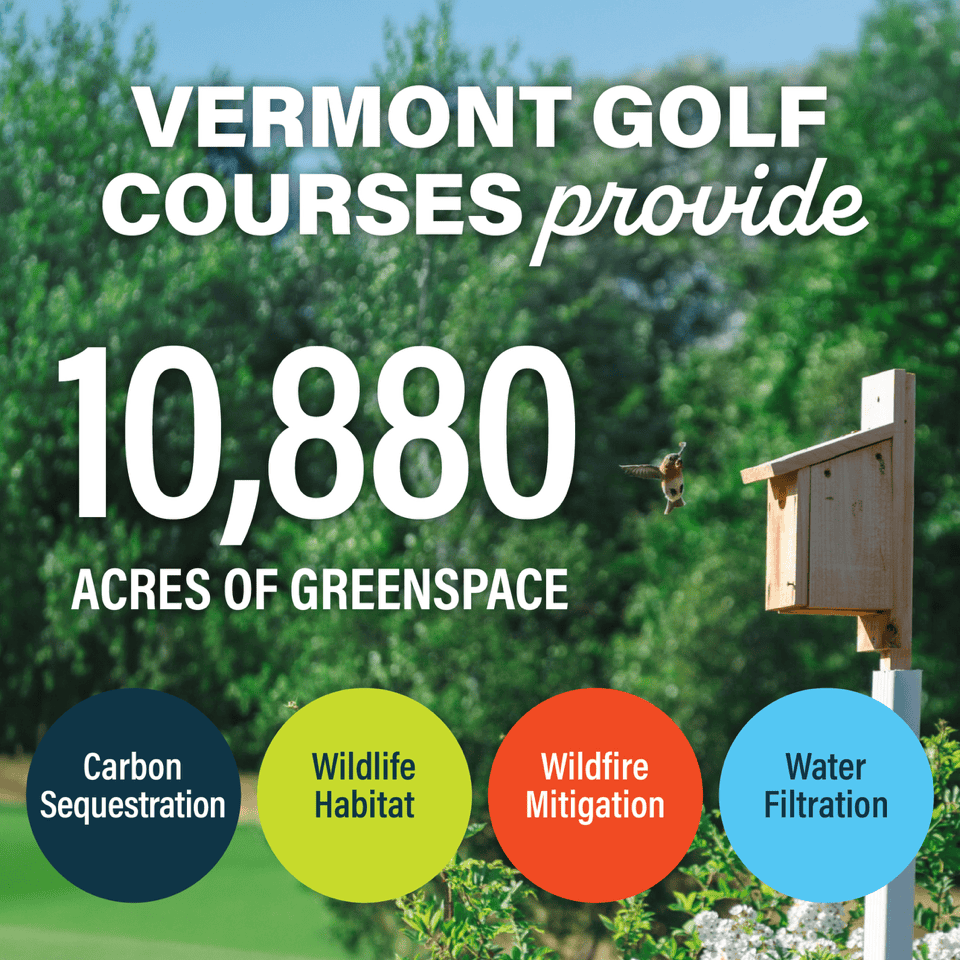
Vermont golf courses collectively preserve more than 10,800 acres of open greenspace across the state, playing a meaningful role in environmental stewardship. These landscapes serve as more than just places to play—they provide critical wildlife habitat, support biodiversity, and help maintain Vermont’s natural beauty. Through responsible land management practices, courses contribute to carbon sequestration, help filter and protect local water sources, and reduce wildfire risk through maintained vegetation. Golf in Vermont exists in harmony with the environment, ensuring these spaces remain healthy and accessible for generations to come.
Behind these numbers is a deeper story about the role golf plays in shaping Vermont’s economy, environment, and communities. The full Economic Impact Study provides a comprehensive look at the data, insights, and statewide reach of the game. Click below to explore the complete report and see the full impact of golf across Vermont.